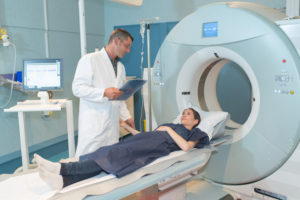
When your doctor orders an MRI Scan, they are looking for a clearer set of images of what is going on inside your body. MRI scans are also known as Magnetic Resonance Imaging, and they involve a machine that uses powerful magnetic and radio waves to take highly detailed pictures of your internal structures. MRI scans are used to diagnose injuries and illnesses that affect bones, joints, muscles, organs, and other soft tissues inside the body. Unlike an X-ray or CT scan, this type of diagnostic imaging test does not use any radiation. There are many types of MRI scans, from the type of machine used to what the scan is looking for.
Open vs. Closed MRI Scans
The first thing you might want to know is whether you are having an open or closed MRI scan. MRI scans are typically depicted in television and movies as a closed, tube-like machine where many characters experience stress or claustrophobia. While this type of test can feel more confining because of the shape of the machine, there are also open MRI machines. This type of MRI scan is recommended for people who suffer from claustrophobia or a fear of small spaces. Whether or not you are in an open or closed MRI scan, you will also not be allowed to wear any metal, like jewelry, buttons, or zippers, on your clothes because the machine uses high-powered magnets.
What Is an MRI with Contrast?
So what should you expect when getting an MRI? In some instances, your doctor may request an MRI with contrast. This means you will be injected with what is called a contrast dye that helps improve the quality of the images taken. When a contrast dye is injected, it can enhance the visibility of certain illnesses or injuries, like tumors, blood vessels, and blood supply to specific areas of interest. An MRI with contrast may also be used to track the progression of certain degenerative diseases and illnesses, like multiple sclerosis and cancer.
Three Types of MRI Scans
There are actually many types of MRI scans that assess various parts of the body in great detail. Here are three examples of MRI scans and what they look for:
Functional MRI
A functional MRI, also known as an fMRI, assesses your brain activity and blood flow to the brain. This type of MRI is also used to view how specific parts of your brain activate when you perform certain tasks or functions. Your doctor may order a functional MRI if they suspect a brain injury and want to run further tests for more information. Functional MRIs are also common in degenerative diseases like dementia and Alzheimer’s. A doctor may also recommend a functional MRI if you are about to undergo surgery to rule out any tumors or risk of epilepsy during the procedure.
Cardiac MRI
Your doctor may order a cardiac MRI for a more detailed look at your heart and how it is functioning. A cardiac MRI provides your doctor with highly detailed images of your heart structure, blood vessels, and circulatory system. Common reasons why your doctor may schedule you for a cardiac MRI include detecting problems with the heart structure, like blockages to blood vessels or arterial issues. If you have suffered from a heart attack, then your doctor may order a cardiac MRI to assess the damage to the structure of your heart and its functioning. Cardiac MRIs are also used to detect tumors that may be present in or around the heart and compromise your circulatory system.
Musculoskeletal MRI
A musculoskeletal MRI is commonly used to assess illnesses and injuries to your bones, joints, muscles, ligaments, and other soft tissues. An orthopedic doctor may request a musculoskeletal MRI if you suffered a car accident injury or other injuries that may have damaged your internal organs or musculoskeletal system. While X-rays are commonly associated with scanning for broken bones, MRIs can detect hairline fractures that can be difficult to spot on an X-ray. A musculoskeletal MRI may also be recommended to evaluate joint and cartilage damage from an injury, such as a torn ligament, or from an issue like arthritis.
How to Prepare for an MRI Scan
If your doctor has scheduled you for an MRI, you may be wondering how to get ready for your appointment. The good news is that preparing for an MRI scan is usually simple and straightforward. In most cases, you can continue your normal daily routine unless your doctor gives you specific instructions otherwise.
You’ll want to wear comfortable clothing to your appointment, though it helps to keep in mind that MRI machines use powerful magnets. Because of this, you cannot have any metal on your body during the scan. This includes jewelry, watches, eyeglasses, hairpins, and even clothing with metal zippers or buttons. In some cases, you may be asked to change into a gown to help make sure there are no metal materials present.
If you are scheduled for an MRI with contrast, your doctor may give you additional instructions, such as avoiding food or drink for a few hours before the scan. It’s also important that you let your doctor know about any medical conditions, allergies, or implants you may have. Devices like pacemakers, metal clips, or joint replacements can affect whether an MRI is safe for you.
Arriving a little early to your appointment can help you complete any necessary paperwork and ask questions before your scan begins. Being prepared ahead of time can help make the entire process smoother and more comfortable.
What Happens During an MRI?
Knowing what to expect during an MRI scan can help ease any anxiety you may have about the experience. When you arrive, a technician will guide you through the process and answer any questions before the scan begins. During the MRI, you will lie down on a padded table that slides into the machine. Depending on the type of scan, your head, chest, or another part of your body will be positioned inside the MRI scanner. The technician may use cushions or straps to help keep you still because movement can affect the quality of the images.
Once the scan begins, you’ll hear loud tapping or thumping noises coming from the machine. This is completely normal and is caused by the MRI’s internal components working to capture detailed images. In many cases, a technician can provide you with earplugs or headphones to make you more comfortable, and you may even be able to listen to music. It’s important to remain as still as possible during the scan so the images come out clearly. The technician will be able to see and hear you the entire time, and you’ll typically have a way to communicate if you need assistance. MRI scans usually take anywhere from 30 to 60 minutes, depending on the area being examined.
MRI vs. Other Diagnostic Tests: What’s the Difference?
When it comes to diagnostic imaging, there are several different tools your doctor may use, including X-ray vs. PET vs. CT vs. MRI. Each type of imaging serves a different purpose and provides unique information about the body.
- MRI: An MRI is best known for its ability to produce highly detailed images of soft tissues, such as muscles, ligaments, organs, and the brain. Because it uses magnetic fields instead of radiation, it is often preferred for evaluating complex conditions or injuries involving soft tissue.
- X-Rays: X-rays, on the other hand, are commonly used to examine bones. They are quick and effective for detecting fractures, dislocations, and certain lung conditions. However, they do not provide the same level of detail for soft tissues as an MRI.
- CT scans: CT scans (also known as CAT scans) combine multiple X-ray images to create cross-sectional views of the body. They are often used in emergency situations because they can quickly detect internal bleeding, organ injuries, or complex fractures. While CT scans provide more detail than standard X-rays, they still rely on radiation and may not capture soft tissues as clearly as an MRI.
- PET scans (positron emission tomography scans) work a bit differently from other imaging types. Instead of focusing primarily on structure, PET scans show how tissues and organs are functioning. They use a small amount of radioactive material to highlight areas of high activity in the body. PET scans are often used to detect cancer, evaluate how well treatments are working, and identify changes in brain function.
Your doctor will choose the type of imaging based on your symptoms, medical history, and the area of the body being evaluated. In many cases, these imaging tools work together to give a complete picture of your health.
Common Conditions Diagnosed with MRI
MRI scans are incredibly versatile and are used to diagnose a wide range of conditions throughout the body. Because they provide such detailed images of soft tissues, they are especially useful for identifying issues that may not appear on other types of imaging.
- Brain: MRIs can help detect conditions such as tumors, stroke, multiple sclerosis, and other neurological disorders. They can also be used to evaluate ongoing symptoms like chronic headaches, dizziness, or memory problems.
- Spine: MRIs are often used to identify herniated discs, nerve compression, spinal cord injuries, and degenerative conditions like arthritis. These scans can help pinpoint the exact source of back or neck pain.
- Joints: MRIs are commonly used to diagnose injuries such as torn ligaments, tendon damage, and cartilage issues. This makes them especially valuable for patients recovering from sports injuries or car accidents.
MRI scans can also be used to evaluate the heart and blood vessels, detect tumors in various parts of the body, and assess internal organs such as the liver, kidneys, and pancreas. In many cases, an MRI provides the detailed information needed to create an accurate diagnosis and guide the next steps in treatment.
Visit AICA Orthopedics for Diagnostic Imaging Near You
The team of multi-specialty doctors at AICA Orthopedics has access to these types of state-of-the-art diagnostic imaging tools in-house, which means you can meet with your doctor and go for an MRI all in one convenient location. This streamlined approach helps reduce wait times, speeds up diagnosis, and allows your care team to begin developing a personalized treatment plan right away. Whether you’re dealing with pain after an injury or trying to get answers about ongoing symptoms, having everything under one roof makes the process easier and less stressful. Visit AICA Orthopedics in Marietta and find out more about why an MRI scan may be right for you.